Skip Navigation or Skip to Content

ChatGPT Image May 13, 2026, 02_16_46 PM

You found the Skills Inventory Reality Check🪂

For everyone's who's been asked "so what skills do we actually have" - and watched the room go quiet, because the only answer was a spreadsheet from 2023, a survey nobody finished and a job title field. 

23718fee-7faa-4113-9ed4-afcd26f37c84

Three traps that leave you with a skills inventory you can't trust.

If your skills inventory feels both hard and useless, it's probably because of one of these.

press-post-graphic
The spreadsheet survey trap

Once-a-year skills survey. Managers fill it in for their teams. The data is two months stale by the time it lands and 18 months stale before anyone uses it. That's not a baseline. That's a snapshot of last year, plus optimism.

press-post-graphic
The off-the-shelf ontology trap

Buying a generic skills library off the shelf and calling it yours. A 50,000-skill taxonomy scraped from public data has no idea what "senior" means in your engineering org, or which capabilities your business actually rewards. The list is the easy part. The fit is the work.

press-post-graphic
The HRIS-is-enough trip

Job title and tenure aren't skills data. They're proxies for skills you're hoping someone has. A "Senior Data Analyst" in one team looks nothing like a "Senior Data Analyst" in another. Your HRIS knows this and isn't telling you.
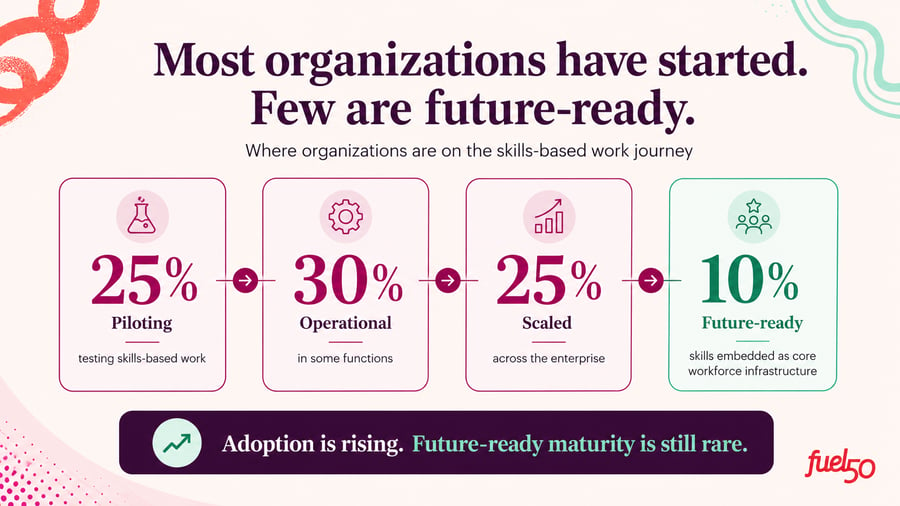
Skills-based maturity journey progress chart
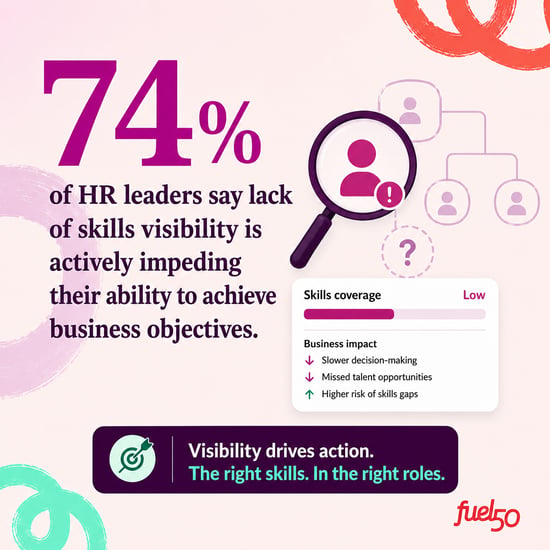
74% of HR leaders face visibility gaps

Three moves that turn skills into actual signal

The shift is from collecting skills data to reading the data you produce every day. 

Inventory what's coming, not just what's here.

A skills inventory that only sees inside your org is backwards-looking by design - you can describe yesterday in great detail. The version that works mixes your internal skills with external market intelligence: which skills are emerging in your industry, which are going obsolete, what your competitors are hiring for. Your inventory becomes a forecast, not a snapshot.

Validate close to the work.

Skills are most accurately captured right after they're used - finished gig, completed project, role change. Catch them in the moment, not in a once-a-year campaign that runs months after the work happened.

Build the ontology, then govern it.

A static skills list dies the day it's published. A governed one stays alive - owned by someone who curates it as the business changes, with people scientists keeping it honest and bias-tested.

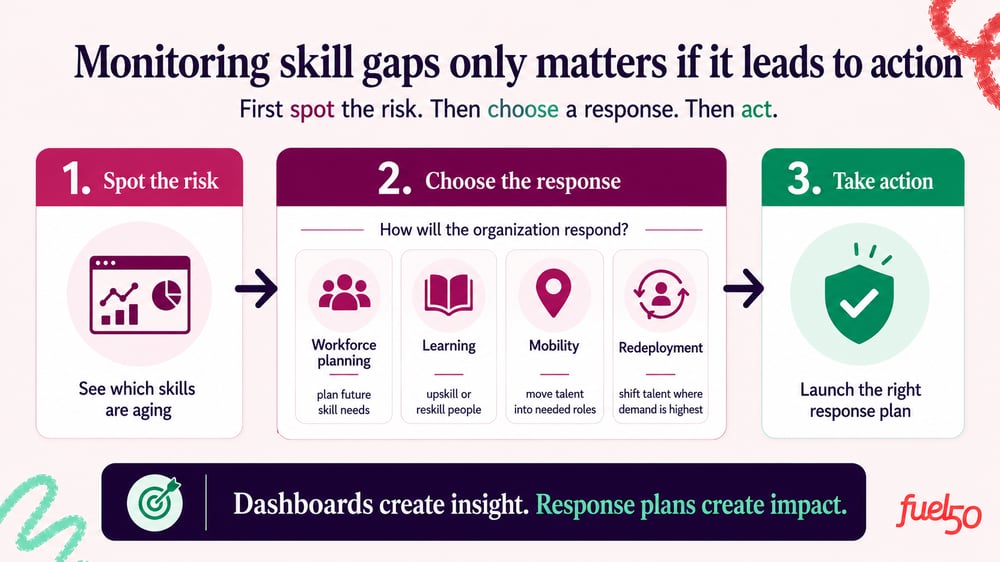
Monitor skills gaps

Three things you can do this week

Monday

Triangulate one job family.

Ask three managers to list the top 10 skills for the same role. Compare answers. You'll see the same role described three different ways. That's your data problem.

Wednesday

Audit one talent profile.

Open the HRIS record of one person you know well. Beyond title and tenure, what skills do you actually have on file? If none, that's your starting line.

Friday

Date-stamp your current source.

Find your most-trusted skills source today. When was it last refreshed? If it's older than six months, it's not data - it's a guess.

We think a skills inventory should be a forecast - not a snapshot from 2023.

That's why we built Skills Inventory, to bring every skill in your org into one governed view, enriched with global labor market intelligence so your inventory knows what's coming next. People scientists in the loop. AI-suggested updated as the market shifts. Audit trails for everything.

No form to fill out for finding this page. Decode the hype, send to the next person about to sit through an AI careers demo, and keep hunting.


P.S - There are 4 more easter eggs hidden around the site. Happy hunting. 🪂
P.P.S. - Tag Fuel50 on LinkedIn with your favorite line from this page and we'll send you something nice.
© Fuel50. All Rights Reserved.